How Fitness Trainers in Singapore Are Addressing Sedentary Lifestyle Damage in Office Workers
Singapore has one of the highest rates of knowledge worker employment in Southeast Asia, and with it one of the most significant concentrations of sedentary lifestyle-related physical dysfunction in the region. The typical Singapore office worker accumulates eight to ten hours of seated work, a commute involving additional sitting, and leisure time that is predominantly screen-based, producing a total daily sitting time that exceeds twelve hours for many professionals. The cumulative physiological consequences of this pattern are well-documented and represent one of the most pressing health challenges that fitness trainer singapore professionals are increasingly trained to address.
The Specific Damage That Prolonged Sitting Causes
The physiological damage of prolonged sitting operates through several distinct mechanisms that are important to understand individually because each requires a different corrective approach.
Hip Flexor Shortening and Its Cascade Effects
The hip flexors, primarily the iliopsoas group, function to flex the hip joint. In prolonged sitting, these muscles are maintained in a shortened, contracted position for hours at a time. Sustained shortening produces adaptive muscle shortening, a process where the muscle establishes a new, shorter resting length that persists when the person stands and moves.
Shortened hip flexors create an anterior pelvic tilt in standing, which increases lumbar lordosis and inhibits the gluteal musculature through reciprocal inhibition. Inhibited glutes reduce the power and stability available from the hip extension pattern, which affects every locomotion and lifting movement that the human body performs. Singapore fitness trainers who understand this cascade design corrective programmes that address the root cause of hip flexor shortening rather than treating only the downstream complaints of lower back pain and poor squatting mechanics.
Thoracic Spine Stiffness and Shoulder Consequences
Prolonged seated work creates sustained thoracic kyphosis, a forward-rounded upper back position that becomes progressively stiffer as the thoracic facet joints adapt to the consistently maintained flexed position. Thoracic stiffness has direct consequences for shoulder function because adequate overhead shoulder flexion requires thoracic extension mobility to allow the scapula to rotate appropriately on the rib cage.
Singapore office workers who attempt overhead pressing movements without adequate thoracic extension mobility compensate through excessive lumbar extension, which transfers the compressive load of overhead movements onto the lumbar spine rather than distributing it through the intended thoracic and shoulder structures. Correcting this pattern requires deliberate thoracic mobility work before shoulder loading is appropriate.
Deep Cervical Flexor Weakness and Neck Pain
The head-forward posture of prolonged screen use creates a mechanical environment where the deep cervical flexors, the muscles that support the weight of the head in its optimal position, are chronically lengthened and progressively weakened. As these deep stabilisers weaken, the superficial cervical musculature including the sternocleidomastoid and scalenes compensates through increased tonic activity, producing the neck tension and cervicogenic headaches that are nearly universal complaints among Singapore’s office working population.
Corrective Strategies Singapore Fitness Trainers Are Applying
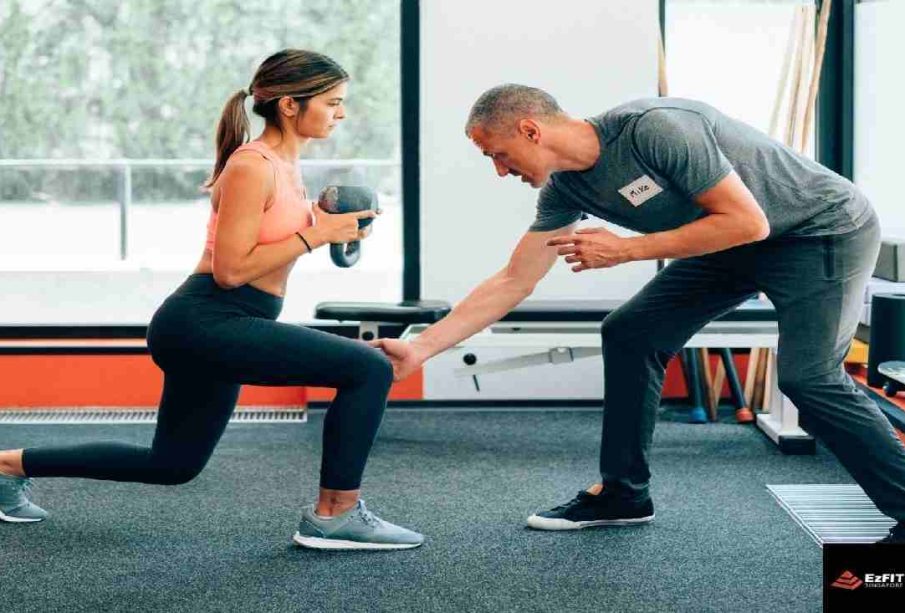
The most effective fitness trainers in Singapore who work with office worker populations have developed systematic corrective approaches that address the specific dysfunction patterns of prolonged sitting rather than simply prescribing generic exercise.
The Corrective Session Structure
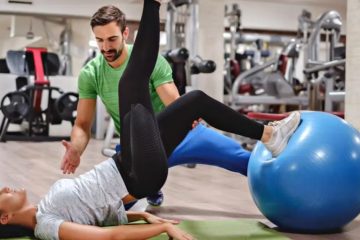
A corrective training session for Singapore office workers typically follows a four-phase structure. The inhibitory phase uses self-myofascial release on overactive tissues including the hip flexors, thoracic paraspinals, and pectoralis minor. The lengthening phase uses targeted mobility work to restore range of motion in restricted joints including the thoracic spine and hip extension. The activation phase uses isolated exercises to activate inhibited muscles including the glutes, deep cervical flexors, and lower trapezius. The integration phase incorporates these corrections into fundamental movement patterns under appropriate loading.
Movement Snack Prescriptions
Singapore fitness trainers who work with office populations increasingly prescribe movement snacks, brief but targeted movement interventions performed multiple times throughout the workday, as a complement to formal training sessions. A two to three minute movement snack performed every ninety minutes of seated work, consisting of thoracic extension over a chair back, hip flexor stretching, and glute activation exercises, meaningfully reduces the adaptive shortening that accumulates during prolonged sitting.
True Fitness Singapore’s fitness training team is equipped to assess and address the specific postural and movement dysfunction patterns of Singapore’s professional population, providing corrective programming that produces meaningful improvements in both physical comfort and training performance. True Fitness Singapore offers the coaching environment where the office worker’s specific physical challenges receive the targeted, evidence-based attention they require.
FAQs
Q. – I have been sitting at a desk for ten years and my lower back hurts most days. Can a fitness trainer in Singapore help, or do I need to see a doctor first?
Ans. – For chronic lower back pain that has been present for an extended period without acute injury event, a fitness trainer with corrective exercise expertise can provide meaningful help. However, a medical assessment is advisable before beginning structured corrective training if you have not had one, to rule out structural issues including disc pathology, nerve compression, or other clinical conditions that require medical management before exercise intervention. Once medical causes have been ruled out or managed, a corrective fitness programme is one of the most effective interventions available for chronic non-specific lower back pain associated with sedentary work patterns.
Q. – Is standing at a standing desk enough to offset the damage from sitting, or do I still need a structured fitness programme?
Ans. – Standing desks reduce seated time but do not replicate the physiological benefits of structured exercise, and prolonged static standing introduces its own problems including calf fatigue, lumbar stiffness from static loading, and varicose vein risk. The most beneficial approach combines varied posture across the workday, including sitting, standing, and brief walking intervals, with a structured fitness programme that provides the progressive loading, movement variety, and hip extension patterns that neither sitting nor standing at a desk produces. Standing desks are a useful component of a comprehensive sedentary lifestyle management strategy, not a replacement for structured corrective training.
Q. – My employer offers an ergonomic assessment programme. Should I prioritise this or a fitness trainer consultation first?
Ans. – Both are valuable and address different dimensions of the same problem. An ergonomic assessment optimises your work environment to reduce the physical stress that your workstation imposes on your body during work hours. A fitness trainer consultation addresses the adaptive dysfunction that has already accumulated from your existing work pattern and prescribes the corrective interventions that restore functional capacity. The two interventions are complementary rather than competing, and completing both produces better outcomes than either alone.
Q. – How long before I see meaningful improvement in my posture and pain levels from a corrective fitness programme?
Ans. – Meaningful improvements in pain levels typically begin within four to six weeks of consistent corrective work for most common office worker complaints. Visible postural improvements take longer because they reflect structural adaptation in muscle length and motor pattern reorganisation that develops over months rather than weeks. Setting realistic expectations from the beginning of a corrective programme prevents the premature abandonment that occurs when clients expect faster results than the biology of soft tissue adaptation can deliver.
Q. – I work from home now and my desk setup is poor. Does my fitness trainer need to know this when designing my programme?
Ans. – Yes, and a detailed understanding of your home work environment including desk height, chair quality, screen position, and typical posture during work is directly relevant to programme design. A trainer who knows that your home setup forces a forward head position and rounded shoulder posture will incorporate specific corrective priorities that a trainer without this context would not identify as primary concerns. Sharing photos of your home work setup with your trainer provides even more specific information for programme personalisation.